State Pension Rates If you’re drawing the State Pension, or you’re getting close to it, you’ll want to know exactly what’s changed this year. The State Pension Rates went up in April under the triple lock, and the increase is the biggest earnings-driven rise pensioners have seen in a few years. Depending on which pension you’re on, that means either £241.30 or £184.90 a week — but the number you actually get depends on your National Insurance record and which system you fall under.
Here’s a clear breakdown of the new rates, how the increase was calculated, and what it means for your income this year.
Visit Now: https://wishlio.site/
What Changed in April State Pension Rates 2026–27
From 6 April 2026, both the New State Pension and the Basic State Pension rose by 4.8%. State Pension Rates 2026–27 That figure comes from the triple lock, the rule that increases the State Pension every year by whichever is highest out of three measures: average earnings growth, CPI inflation, or 2.5%.
This year, earnings growth was the winner. Average weekly earnings for the May to July 2025 period came in at 4.8%, comfortably ahead of the September 2025 CPI figure and well above the 2.5% floor. That earnings figure is what triggered this year’s rise.
The three headline points to know:
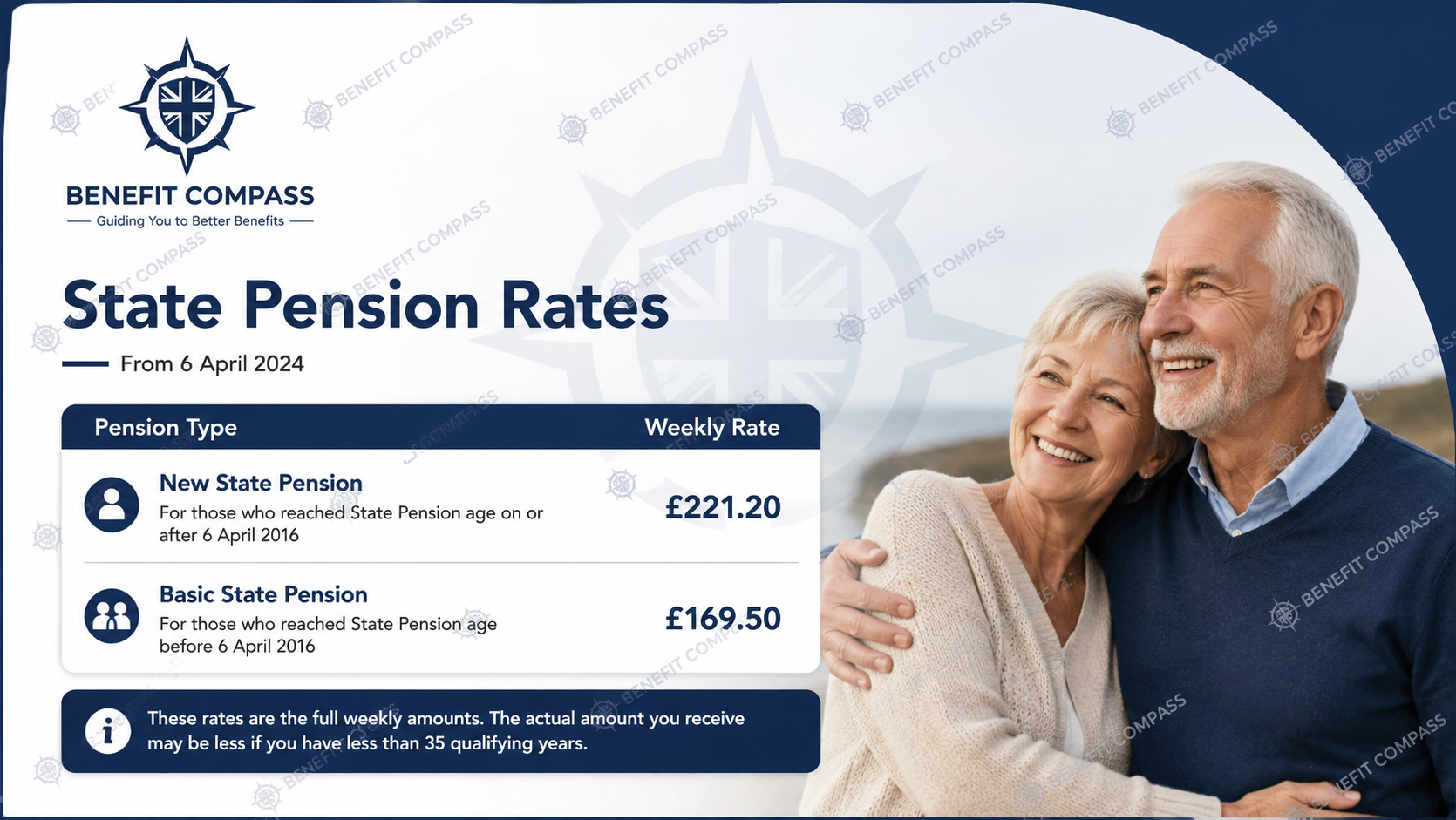
- The New State Pension rose to £241.30 a week — up from £230.25 in 2025/26.
- The Basic State Pension rose to £184.90 a week — up from £176.45 in 2025/26.
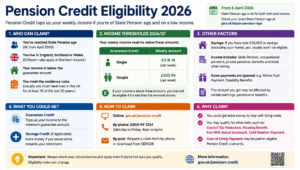
- Pension Credit’s standard minimum guarantee rose in line with the same 4.8% — to £238.00 a week for single claimants and £363.25 for couples.
Because State Pension payments are set weekly but usually paid every four weeks, most pensioners saw the new amount land in their account in late April or early May, even though the rate technically changed from 6 April.
Read More: Pension Credit Eligibility 2026 – Check If You Qualify
New Weekly Payment Rates for 2026/27
Here’s how the State Pension Rates 2026–27 compare against last year’s figures:
| Pension type | 2025/26 rate | 2026/27 rate | Weekly increase |
|---|---|---|---|
| New State Pension (full) | £230.25 | £241.30 | +£11.05 |
| Basic State Pension (full) | £176.45 | £184.90 | +£8.45 |
| Category B (lower) — spouse/civil partner’s NI | £105.70 | £110.75 | +£5.05 |
| Category C or D (non-contributory) | £105.70 | £110.75 | +£5.05 |
In annual terms, the full New State Pension now pays out roughly £12,548 a year, up from £11,973 the year before — an increase of about £575 over twelve months.
Who Gets the New State Pension vs the Basic State Pension
Which of these two figures applies to you depends entirely on your date of birth, not your income or savings:
- New State Pension — for men born on or after 6 April 1951 and women born on or after 6 April 1953, who reach State Pension age from 6 April 2016 onward.
- Basic State Pension — for people who reached State Pension age before 6 April 2016. This group may also have an Additional State Pension (sometimes called SERPS or State Second Pension) on top of the basic amount, depending on their NI record.
If you’re already receiving your pension, you’ll already know which system you’re on. If you haven’t claimed yet, your State Pension forecast on gov.uk will tell you which rules apply and give an estimate of what you’re likely to get.
How the Triple Lock Actually Works
The triple lock isn’t a fixed percentage — it’s a formula that picks the highest of three numbers each year:
- Average earnings growth, measured as the annual change in regular pay for May to July, published by the Office for National Statistics.
- CPI inflation, measured as the year-on-year change in the Consumer Prices Index for the September before the increase takes effect.
- A floor of 2.5%, which guarantees a minimum rise even if both earnings and inflation are low.
Whichever of these three numbers is highest becomes next April’s increase. For 2026/27, earnings growth of 4.8% beat both the CPI figure and the 2.5% floor, so that’s the rate that was applied.
Example: If the full New State Pension was £230.25 a week before the increase, the calculation looks like this:
£230.25 × 1.048 = £241.30 (rounded to the nearest 5 pence, as is standard practice)
That’s the exact rate now in payment for anyone on the full New State Pension.
Read More: Personal Independence Payment (PIP) 2026 – New Rules, Rates and Eligibility
Do You Get the Full Amount? Qualifying Years Explained
Not everyone receives the full £241.30 or £184.90. Your actual payment depends on how many “qualifying years” of National Insurance contributions you have on record.
- New State Pension: you need 35 qualifying years to get the full amount. Fewer years mean a proportionally reduced payment, down to a minimum of 10 qualifying years to get anything at all.
- Basic State Pension: the qualifying years needed vary depending on your date of birth and NI record, and older rules from before 2016 can still affect the final figure.
A qualifying year is generally one where you paid, or were credited with, enough National Insurance — through employment, self-employment, or credits for things like caring responsibilities or unemployment.
If you have gaps in your NI record, you may be able to fill them by paying voluntary Class 3 contributions. Each extra qualifying year typically adds a set amount to your weekly New State Pension — check your exact NI record and forecast on gov.uk before deciding whether it’s worth paying.
State Pension Age in 2026 (State Pension Rates 2026–27 )
Alongside the rate increase, the State Pension age itself is changing. From 6 April 2026, the State Pension age began rising from 66 to 67, in stages based on date of birth:
- Born before 6 April 1960: State Pension age stays at 66.
- Born between 6 April 1960 and 5 March 1961: State Pension age rises gradually, month by month, from 66 to 67.
- Born on or after 6 April 1961: State Pension age is 67.
A further rise from 67 to 68 is scheduled between 2044 and 2046, though that’s still years away and could be reviewed before it happens.
State Pension and Income Tax: The Personal Allowance Squeeze
This is the part that catches a lot of pensioners off guard. The Personal Allowance — the amount you can earn before paying Income Tax — is frozen at £12,570 and will stay there until April 2031.
With the full New State Pension now at £12,548 a year, that leaves a gap of just £22 before the Personal Allowance is used up entirely. If you have any other income at all — a private pension, part-time earnings, savings interest, or rental income — that extra income is likely to be taxed, because your State Pension alone is already close to swallowing your full tax-free allowance.
The State Pension itself isn’t taxed at source; instead, HMRC usually collects any tax owed by adjusting the tax code on a workplace or private pension, or through Self Assessment if you don’t have another income source it can adjust.
A practical example: Margaret receives the full New State Pension of £12,548 a year, plus a small workplace pension of £3,000 a year. Her total income is £15,548, which is £2,978 above the Personal Allowance. That excess is taxed at the basic rate of 20%, meaning she owes roughly £595.60 in Income Tax for the year, usually collected through her workplace pension’s tax code.
Read More: How to Apply for Universal Credit – Step-by-Step Guide (2026)
Pension Credit: Topping Up a Lower State Pension
If your total weekly income — including your State Pension — falls below a set threshold, you may be entitled to Pension Credit, a separate, means-tested benefit that tops up your income.
For 2026/27, the standard minimum guarantee under Pension Credit is:
- £238.00 a week for single claimants
- £363.25 a week for couples
Because the full New State Pension (£241.30) now sits above the single person’s Pension Credit threshold, most people receiving the complete New State Pension won’t qualify for the standard Guarantee Credit. However, anyone with a reduced State Pension — because of gaps in their NI record — or anyone with additional needs, such as a severe disability or caring responsibilities, may still be eligible for a top-up.
Pension Credit is worth checking even if you think you won’t qualify, because an award of just £1 a week can unlock other help, including:
- Council Tax discounts
- A free TV licence if you’re 75 or over
- Help with NHS costs like dental treatment and prescriptions
- Support with heating costs through the Warm Home Discount Scheme
Deferring Your State Pension
If you don’t need the income straight away, you can choose to delay claiming your State Pension. Deferring increases your eventual weekly payment, though the exact boost depends on which system you’re under and how long you defer for.
Deferring makes the most sense if you’re still working, have other income to live on, or simply want a higher weekly amount later in retirement. It’s worth running the numbers carefully, though, since the break-even point — how many years you’d need to draw the higher pension to make up for the deferred years — can take longer than expected.
Read More: Universal Credit Eligibility Checker – Who Can Claim in 2026?
Quick Comparison: 2025/26 vs 2026/27 at a Glance
| Category | 2025/26 | 2026/27 | Change |
|---|---|---|---|
| New State Pension (weekly) | £230.25 | £241.30 | +4.8% |
| New State Pension (yearly) | £11,973 | £12,548 | +£575 |
| Basic State Pension (weekly) | £176.45 | £184.90 | +4.8% |
| Pension Credit, single | £227.10 | £238.00 | +4.8% |
| Pension Credit, couple | £346.60 | £363.25 | +4.8% |
| Personal Allowance | £12,570 | £12,570 | No change |
Final Thoughts
The State Pension Rates 2026–27 mark one of the strongest earnings-driven rises pensioners have had in recent years, with both the New and Basic State Pension increasing by 4.8%. That’s genuinely good news for weekly income. The catch is the frozen Personal Allowance, which means more pensioners with any additional income are being pulled into paying tax, even though their real spending power hasn’t grown by much once bills and living costs are factored in.
If you’re not sure exactly what you’re entitled to, don’t rely on the headline figures alone. Check your personal State Pension forecast on gov.uk, confirm your qualifying years, and if your income is on the lower side, look into whether Pension Credit could top you up — because the exact amount you receive always comes down to your own National Insurance record rather than the standard rate alone.
FAQ’s
What is the new State Pension Rates 2026–27 for a single person?
Under State Pension Rates 2026–27, someone on the full New State Pension receives £241.30 a week, while someone on the full Basic State Pension receives £184.90 a week, depending on which system they qualify under.
When did the State Pension Rates 2026–27 take effect?
The new rates took effect from 6 April 2026, though most pensioners saw the increased amount land in their bank account from late April or early May, since payments are made a few weeks in arrears.
How much of an increase is included in the State Pension Rates 2026–27?
Both the New and Basic State Pension rose by 4.8% under State Pension Rates 2026–27, driven by average earnings growth, which was the highest of the three triple lock measures this year.
Do I need 35 qualifying years to get the full State Pension Rates 2026–27 amount?
Yes, if you’re on the New State Pension, you need 35 qualifying National Insurance years to receive the full £241.30 a week under State Pension Rates 2026–27. Fewer years mean a reduced amount.
Will I pay tax on the State Pension Rates 2026–27 amount?
The State Pension itself isn’t taxed at source, but because the full New State Pension is now close to the frozen £12,570 Personal Allowance, any additional income you have — such as a private pension — is likely to be taxed.
How does the triple lock affect the State Pension Rates 2026–27?
The triple lock guarantees the State Pension rises each year by whichever is highest out of earnings growth, CPI inflation, or 2.5%. For State Pension Rates 2026–27, earnings growth of 4.8% was the highest measure, so that became the increase.
Can I get Pension Credit alongside the State Pension Rates 2026–27?
Possibly. If your total weekly income, including your State Pension, falls below £238.00 (single) or £363.25 (couple), you may be entitled to Pension Credit as a top-up on top of the standard State Pension Rates 2026–27 amount.
Is the Basic State Pension included in the State Pension Rates 2026–27 increase?
Yes. The Basic State Pension rose to £184.90 a week under State Pension Rates 2026–27, the same 4.8% increase applied to the New State Pension.
Does the State Pension age change under State Pension Rates 2026–27?
Yes. Alongside the rate increase, the State Pension age began rising from 66 to 67 in stages from April 2026, based on date of birth, separate from the State Pension Rates 2026–27 payment increase itself.
How do I check my exact entitlement under State Pension Rates 2026–27?
Your exact payment depends on your NI record and qualifying years, so it’s best checked through your personal State Pension forecast on gov.uk rather than relying on the standard State Pension Rates 2026–27 figures alone.